
 Select Language
 English
Aluminum Cans Dewatering: Why It Matters for Efficient Beverage Can Recycling
In beverage recycling, one of the most overlooked but critical steps is aluminum cans dewatering. Many used or unsold cans still contain residual liquid, syrup, or product residue when they arrive at recycling plants, distribution centers, or waste handling facilities. If these cans are transported or baled without proper treatment, they can leak, attract contamination, increase transport weight, and lower the value of the recovered metal. That is why more recyclers and beverage companies are turning to a professional dewatering machine before sending aluminum cans into the next stage of recycling.
The importance of this step is becoming even clearer as aluminum recycling continues to expand globally. According to the Aluminum Association and the Can Manufacturers Institute, aluminum beverage cans in the United States had an average recycled content of 71% in 2023, while their closed-loop circularity rate reached 96.7%, meaning recovered cans are highly likely to become new cans again. The same report also noted that 43% of aluminum cans shipped in the U.S. in 2023 were ultimately recycled. Although that recovery rate still leaves room for improvement, it confirms that aluminum cans remain one of the most recyclable beverage packages on the market.
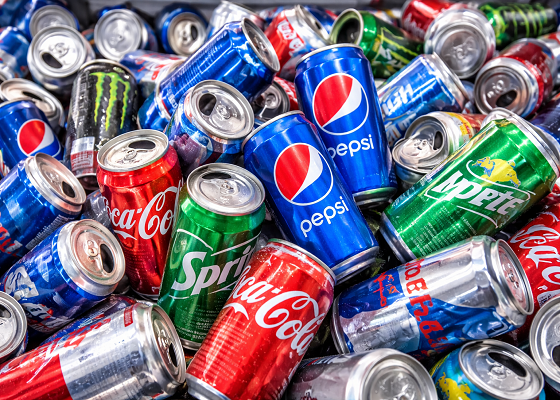
At the same time, large manufacturers are proving how valuable used beverage cans have become. Novelis reported in its FY2024 sustainability update that it recycled more than 2,300 kilotons of aluminum, including 82 billion used beverage cans, and raised the average recycled content in its rolled aluminum products to 63%. Ball, another major player in aluminum packaging, reported reaching 74% average recycled content in beverage packaging in its 2024 combined report. Ardagh Metal Packaging also reported that recycled aluminum content in its beverage cans rose to 78% in 2024, while Crown stated that its 2024 global average recycled content in aluminum beverage cans reached 68%. These figures show that the industry is moving toward higher recycled content, but that progress depends on cleaner, drier, and more efficiently prepared scrap.
This is exactly where aluminum cans dewatering creates value. A can filled with leftover soda, beer, or energy drink is not just metal; it is also liquid weight, mess, and disposal cost. A proper dewatering machine separates the liquid from the can before further handling. GREENMAX notes that its Poseidon dewatering system can remove up to 95% of liquids from beverage containers, while reducing volume significantly through compression. That means less weight during transportation, less leakage in storage, and a cleaner material stream for downstream recyclers. GREENMAX also states that compacted cans can be reduced to roughly one-sixth of their original volume in certain applications, which directly improves storage efficiency and logistics economics.
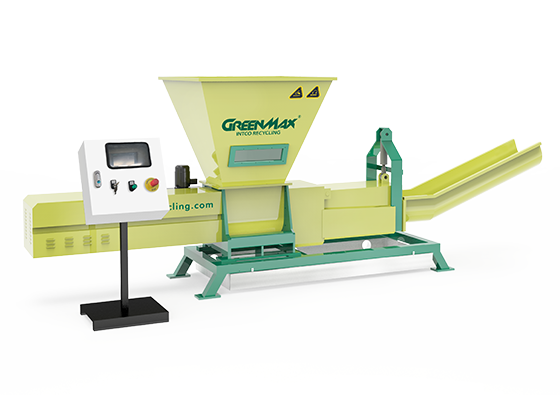
Pepsi Thailand adopted the GREENMAX P-C350 dewatering machine to manage out-of-date drinks more efficiently. Before installing the system, liquid extraction was done manually, which required more labor and more time. After the change, the draining and compacting process became automated, helping reduce waste volume and improve transport and recycling efficiency. Although beverage waste streams often include mixed packaging, aluminum cans are among the standard materials the machine is designed to handle, making this a strong example of how beverage producers can simplify aluminum can recovery at the source.
Another GREENMAX example on aluminum cans dewatering, which described a beverage company that had been struggling with leaking cans, sticky residues, and storage problems. After installing a GREENMAX P Series unit, the company began feeding cans directly into the dewatering chamber, where residual liquid was separated from the aluminum shells before recycling. The result was a cleaner workflow and a material stream better suited for transport and metal recovery. This case reflects a common situation across beverage returns, expired inventory, and damaged can stock: without dewatering, valuable aluminum is mixed with a costly liquid problem.
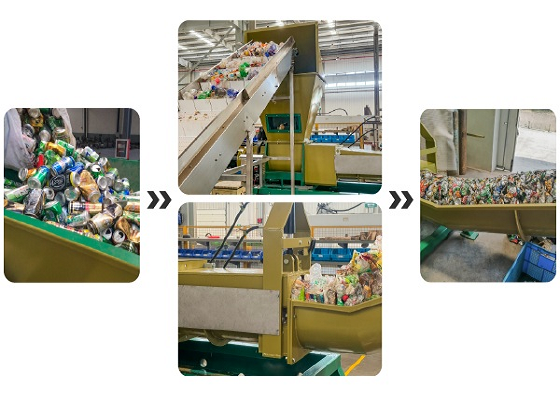
As aluminum producers and can makers push for more circular packaging, the quality of post-consumer and post-industrial scrap becomes more important. A modern dewatering machine does more than remove liquid; it helps protect bale quality, reduce handling costs, and improve the economics of recycling operations. For companies dealing with rejected, returned, or expired beverages, aluminum cans dewatering is not just a cleaning step. It is a practical way to turn messy beverage waste into a more stable, more valuable, and more recyclable resource.