 Select Language
 English
Advantages of recycling waste foam with the Polystyrene Hot Melting Machine and how it compares to other recycling methods
With the improvement of environmental awareness and stricter policy supervision, how to efficiently recycle waste foam plastics (such as EPS, EPE, EPP) has become an important issue in the resource recovery industry. Among the many recycling technologies, Polystyrene Hot Melting Machine, because of its high efficiency, energy saving, and high volume reduction rate, has gradually become a popular choice for waste foam recycling.
A brief description of the two types of recycling
Polystyrene Hot Melting MachineThe foam is melted into a high-density semi-solid by heating it to its softening point and extruded into a block or strip material.
The recycled material can be used for recycled plastic products, pelletizing, injection molding, etc.
Chemical recycling
Typical methods include the use of solvents (e.g., limonene) to dissolve the EPS foam and degrade it into the original monomer or low molecular polymer.
Or use pyrolysis technology to reduce it to gaseous or liquid fuel.
Polystyrene Hot Melting Machine 5 advantages over chemical recycling
1. More environmentally friendly
The hot melt equipment does not need to use chemical solvents or additives, and the process is physical, non-toxic, odorless, and has no waste liquid discharge.Chemical recycling, on the other hand, requires the use of a large number of flammable or harmful solvents, and produces secondary wastewater, gases and safety hazards, which require additional environmentally friendly treatment.
2. Lower cost and simple maintenance
The hot melt machine equipment has a small investment and low operating cost, and only needs electricity supply.
Chemical recycling needs to be equipped with chemical storage, reaction tanks, exhaust and wastewater treatment facilities, and the overall investment and operating costs are much higher than those of hot melt recycling.
3. Safer operation
The operation process of the hot melt equipment is simple, and there is no high-pressure, high-corrosion, and high-volatile chemicals.
Chemical recycling, on the other hand, has flammable, explosive, and corrosive risks, which require professional operation and strict management.
4. The discharged products are stable and easy to store and transport
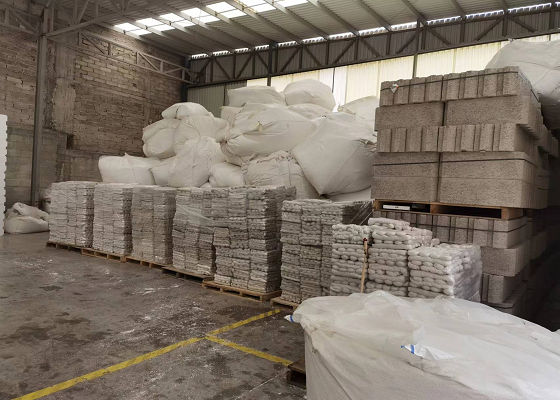
Hot-melted foam-molded "bricks" are strong, easy to store and transport, and are widely marketed.
Chemical recycled products (such as liquid monomers and residues) are not easy to be transported and sold directly, and improper disposal is easy to cause secondary pollution.
5. Adapt to on-site recycling, flexible deploymentThe hot melt machine is suitable for direct deployment and use in factories, logistics parks, fishing ports, communities and other scenarios to achieve on-site processing.
Due to the complex equipment and long treatment cycle, chemical recycling is more suitable for large-scale centralized treatment sites and not suitable for small and medium-sized enterprises.
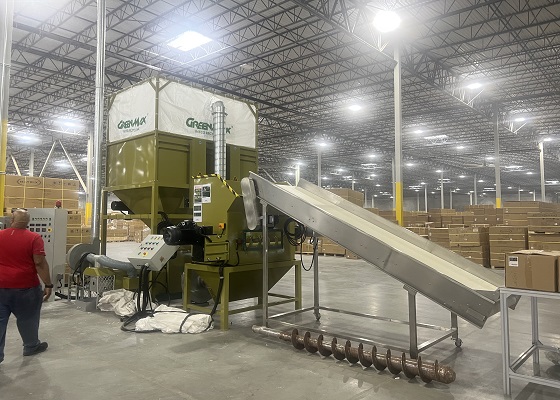
As a representative of modern foam recycling equipment, Polystyrene Hot Melting Machine is becoming the first choice of more and more recyclers and foam generators due to its high efficiency, energy saving and environmental protection. Compared with the traditional cold pressing or single crushing method, hot melt technology not only has better volume reduction efficiency, but also can enhance the market value of recycled materials, which is an important solution to promote the resource utilization of waste foam plastics.