 Select Language
 English
High-Power GREENMAX Foam Densifier: EPE and EPS Foam Collaborative Recycling and Equipment Maintenance Guide
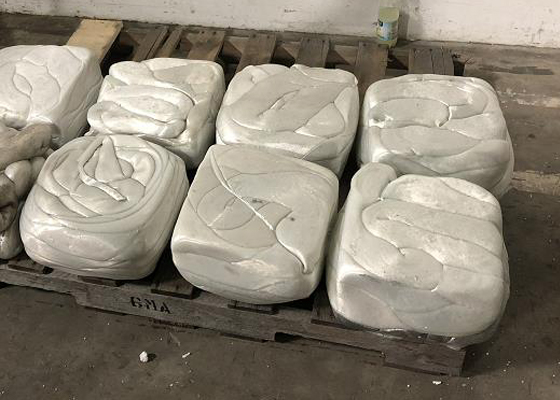
In the context of global plastic pollution management, the efficient recycling of foam materials has become a key part of the circular economy. EPE and EPS, widely used in packaging, construction, and other fields as lightweight materials, present challenges to traditional recycling methods due to their large volume and difficulty in degradation, resulting in low efficiency and high costs. The high-power GREENMAX foam densifier utilizes thermal melting and compression technology to achieve the collaborative recycling of EPE and EPS. It not only significantly reduces foam volume but also converts recycled materials into reusable granular raw materials, providing an innovative solution for the resource recovery of foam waste.
Technical Principles and Advantages of EPE and EPS Synergistic Recycling
The core principle of the GREENMAX foam hot-melt machine is to use high-temperature hot-melt technology to heat fluffy foam materials to a molten state, and then compress them into high-density solid blocks or granules through a screw compression system. The machine's high-power design (typically ≥50kW) allows it to process both EPE and EPS materials simultaneously — although their melting points differ (EPS melts at about 100-120°C, EPE at about 120-130°C), the machine achieves precise temperature control through a segmented temperature system, ensuring that both materials reach the optimal molten state in the same process without excessive degradation. The advantages of synergistic recycling are: First, it simplifies the recycling process, eliminating the need for manual sorting of mixed foams and reducing labor costs; second, it improves recycling efficiency, with a single machine capable of processing 300-500 kg of foam waste per hour, achieving a compression ratio of up to 90:1, significantly reducing transportation and storage space; third, the recycled material has stable quality, and the molten granules can be directly used to produce photo frames, decorative strips, building insulation materials, etc., achieving closed-loop resource utilization.
Key Points of Daily Equipment Maintenance
To ensure the long-term stable operation of the GREENMAX foam densifier, proper maintenance is essential. First, a daily inspection routine should be established: before starting the machine, check whether the power supply, heating system, and cooling system are functioning properly, and remove any impurities or residual foam from the feed inlet to prevent blockages. Second, regular maintenance should focus on core components: the screw and barrel, being wear-prone parts, should be cleaned and inspected for wear periodically. Finally, maintenance during long-term shutdowns should not be overlooked: all residual molten material inside the equipment should be thoroughly removed, the machine body cleaned after disconnecting the power, and a dust cover should be used to prevent dust from entering the internal system and affecting future use.
.png)
Practical Application Cases and Environmental Benefits
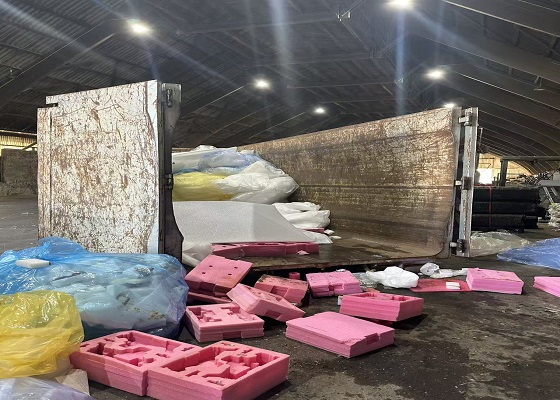
After a certain electronics manufacturing company introduced the GREENMAX high-power foam hot-melt machine, it realized the mixed recycling of EPE cushioning material and EPS turnover boxes generated during the packaging process. The company produces about 15 tons of foam waste per month, and after being processed by the equipment, it is compressed into approximately 150 kg of solid pellets. This not only saves 90% of storage space but also, from an environmental perspective, coordinated recycling prevents foam waste from entering landfills or being incinerated. Assuming that each ton of foam generates 2.5 tons of CO₂, the company can reduce CO₂ emissions by about 37.5 tons annually, while also reducing the potential hazards of plastic pollution to soil and water sources.