 Select Language
 English
GREENMAX Marine Series EPS compactor helps the seafood industry effectively address "white waste" and achieve economic recycling
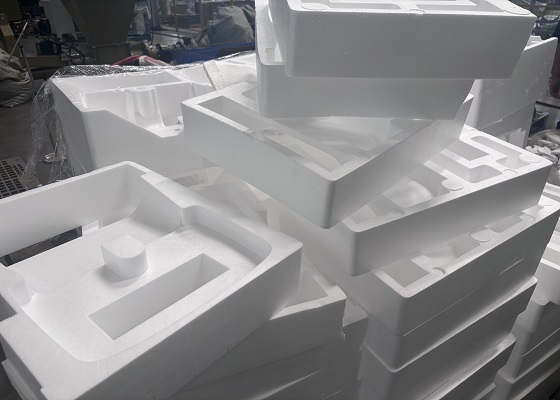
During seafood transportation and sales, EPS (polystyrene foam) packaging, due to its excellent insulation, lightweight, and cushioning properties, has become a mainstream cold chain packaging material for seafood. However, this type of EPS foam packaging is discarded in large quantities after use, becoming a high-volume, low-density, and high-water content municipal solid waste. This article will explore the sources of EPS foam in seafood packaging and focus on the challenges and solutions faced in recycling this high-water content foam packaging using an EPS compactor.
Sources of EPS Seafood Product Packaging
1. Fishing Ports and Seafood Wholesale MarketsAfter seafood is caught and brought ashore, it often undergoes preliminary processing and packaging on-site, with a large number of EPS foam boxes used to hold ice cubes and products like fish and shrimp, ensuring low temperatures and freshness during transportation.
2.Supermarkets and Fresh Food Chain Distribution Centers
Chain supermarkets and fresh food e-commerce platforms commonly use EPS insulated boxes for the transfer and delivery of seafood in cold chain transportation, especially in long-distance transport and home delivery stages.
3.Restaurant Supply Chain
When high-end restaurants or chain dining enterprises purchase seafood, they typically use EPS foam boxes to transport whole boxes of seafood, reducing losses and ensuring readiness for use upon arrival.
These sources make the seafood industry an important generation point for EPS foam packaging waste, and one of its notable characteristics is: high moisture content, severe surface contamination, and distinct odors.
Difficulties in Recycling Water-Containing EPS Foam Packaging
1.High Water ContentDuring the use of packaging, it is often accompanied by crushed ice or ice water. To maintain low temperatures, the inner walls and structure of the foam often absorb a large amount of moisture, with some even seeping into the internal microporous structure.
2.Easy to Breed Odors and Decay
EPS foam that comes into direct contact with seafood is often accompanied by fishy odors, residues, bacteria, and salt residues. If not handled promptly, the recycling environment deteriorates, affecting the operational experience.
3.Traditional Compression Equipment Prone to Moisture Clogging
Conventional EPS Compactors are prone to feeding blockages, screw jams, and decreased compression density when encountering water, which can severely affect the lifespan of the equipment.
Using the GREENMAX Ocean Series EPS Compactor for Recycling Water-Logged Foam Packaging
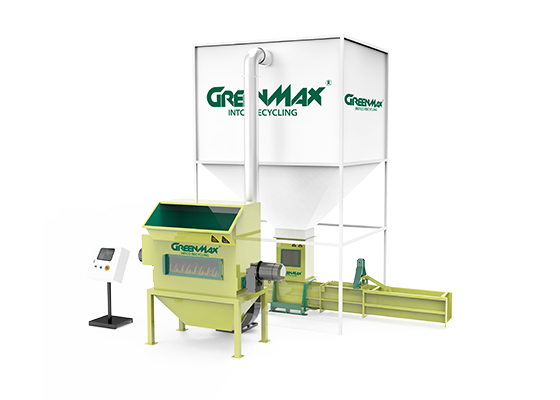
The GREENMAX Marine Series EPS compactor is entirely made of stainless steel to prevent corrosion from high concentrations of seawater, allowing for the safe recycling of foam packaging with water content, even those containing significant amounts of seawater. This equipment can achieve a compression ratio of up to 50:1.Value of Processed Material After Recycling
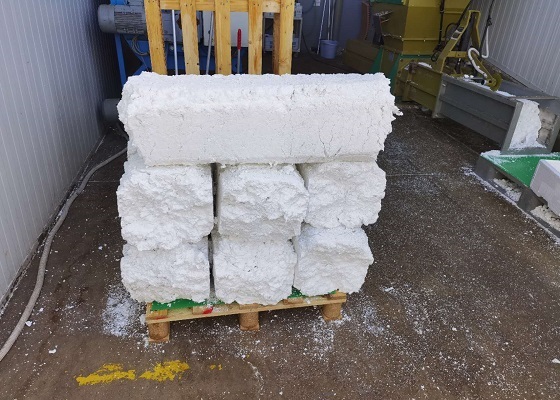
The foam compressed by the EPS compactor can be formed into dense 'foam bricks' with the following advantages:Convenient for transportation and storage: The volume compression ratio reaches 50:1, saving warehousing and logistics costs;High recycling value: It can be used as raw material for recycled PS pellets, which are used to manufacture photo frames, stationery boxes, decorative panels, etc.;Significant environmental impact: Reduces white pollution in the seafood industry and builds a green supply chain.EPS foam is an indispensable packaging material for seafood products.
While it offers advantages in preservation and protection, it also creates significant recycling challenges. Its waterlogged and highly polluting characteristics make traditional processing equipment inadequate for handling such foam waste. However, through targeted pretreatment measures, optimized equipment design, and reasonable operational management, the EPS Compactor can fully handle this task, becoming an important technological force in promoting a green circular economy in the seafood industry.