 Select Language
 English
Foam Compactor is an environmentally friendly solution for recycling substandard foam waste from the construction industry
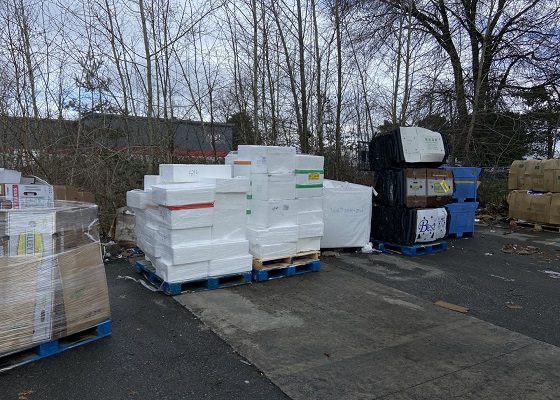
In modern construction projects, foam plastic materials are widely used in thermal insulation, thermal insulation, filling and other fields, the most common of which include EPS (expanded polystyrene), XPS (extruded polystyrene) and PU foam (polyurethane foam). Although these materials have superior properties, they generate a large amount of substandard waste during construction, cutting and transportation. Scraps, cut fragments, and damaged panels accumulate on the construction site, which not only takes up space, affects cleanliness, but also increases the burden of waste disposal in construction projects.
For a long time, this kind of foam waste is often directly landfilled or incinerated, which has high disposal costs and serious environmental pollution, and no longer meets the current requirements of green buildings and low-carbon development. To this end, more and more construction companies and construction units have begun to introduce Foam Compactor to process foam waste in a more efficient and environmentally friendly way to realize the recycling of resources.
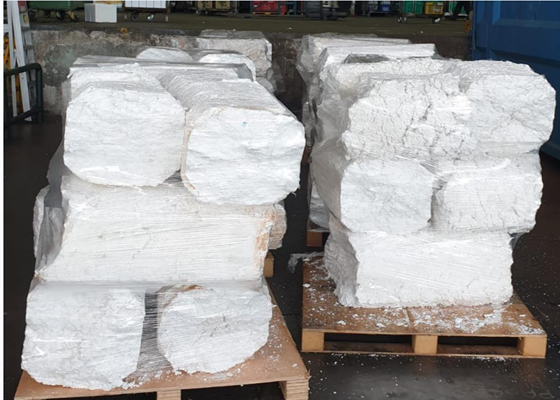
The Foam Compactor is a device dedicated to volume reduction in foam. It compresses large-volume, low-density foam waste into regular, dense blocks by means of spiral propulsion or compression, with a compression ratio of up to more than 1:50. The compressed foam bricks are not only small in size, easy to stack and transport, but also have good recyclability, which can be used as a raw material for recycled plastics and continue to flow into the downstream reuse industry chain.
In the construction industry, the Foam Compactor is very flexible in its application. Whether it's on a residential construction site in an urban city or on the site of a large infrastructure project, the equipment can be quickly deployed. The construction unit can recycle EPS and XPS leftovers in a centralized manner, and process them uniformly through the compressor to reduce the capacity on site. Compared to traditional cleaning methods, this method can significantly reduce waste disposal costs and transportation costs, while improving the cleanliness and safety of the construction site.
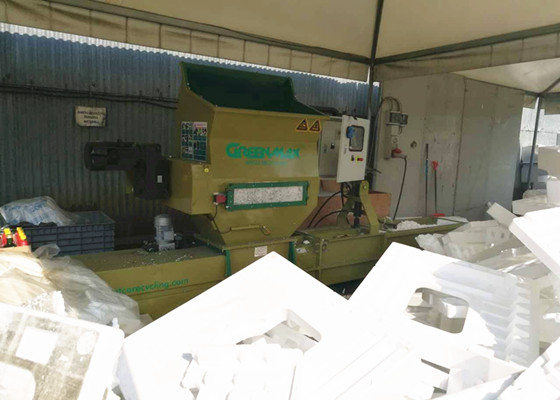
In addition, the compressed foam bricks can be sold directly to the recycled granulation plant to achieve the recycling income of "using waste to feed waste". This not only brings additional economic returns to enterprises, but is also in line with the development trend of green construction and circular economy. Some large-scale projects have also received extra points in the green building review through the deployment of foam compression equipment, which provides important support for the project to apply for green certification.
It is worth mentioning that the Foam Compactor is easy to operate, equipped with an intelligent temperature control system and safety protection devices, and ordinary staff can be operated after simple training. For construction units with long-term pressure on foam waste disposal, this is a practical tool with low investment cost, fast payback cycle and high environmental benefits.
Driven by the "dual carbon" goal, the construction industry is gradually moving towards a new stage of green construction and low-carbon operation. The recycling of foam waste is an important part of this. Through the introduction of Foam Compactor, construction companies can not only effectively dispose of foam waste generated in daily construction, but also convert it into valuable renewable resources, achieve the goal of reduction, recycling, and harmless treatment, and embark on a sustainable development path that pays equal attention to economic and environmental benefits.