
 Select Language
 English
EPE waste recycling driven by innovative technology: Synergistic application of cold pressing, hot melting, and new technologies
With the booming development of the packaging industry, expandable polyethylene (EPE) is widely used in electronics, furniture, logistics, and other fields due to its lightweight and strong cushioning properties. However, the accumulation of EPE waste not only leads to resource waste but also brings environmental pressure. In recent years, the EPE recycling machine has provided a systematic solution for the efficient recycling of EPE waste through upgrades in cold pressing, hot melting technologies, and the integration of new processes.
Cold pressing technology is the fundamental process for EPE recycling, achieving waste reduction through physical compression. EPE material contains a large amount of air, with a density of only 0.03-0.08g/cm³, making direct transportation extremely costly. The cold-press type EPE recycling machine compresses loose EPE waste into one-fiftieth of its original volume at room temperature using spiral extrusion or hydraulic stamping, significantly lowering storage and transportation costs. This technology does not require high-temperature heating, has low energy consumption, and avoids material degradation, making it suitable for relatively clean EPE waste with low levels of contamination, thereby laying the groundwork for subsequent processing.
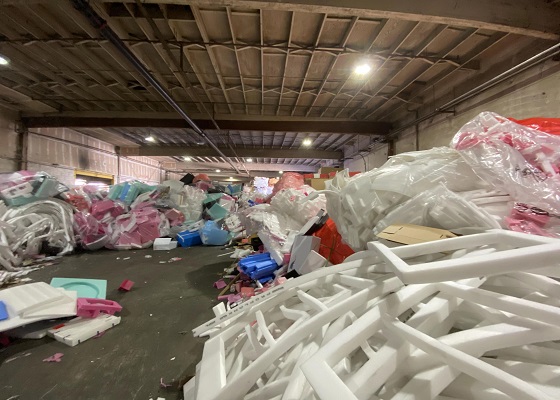
The hot-melt technology focuses on the high compression of EPE waste. After bulky or loose materials undergo cold-press pre-treatment, they are sent to the hot-melt EPE recycling machine, where they are melted at a temperature of 160-180°C. After removing impurities, the material is extruded into pelletized recycled material through a die head. These recycled materials can be reused to produce EPE sheets, cushioning pads, or other plastic products, achieving a closed loop of "from waste to finished product." Compared to cold pressing, hot-melt technology requires higher sealing standards for the EPE recycling machine and must be equipped with an exhaust gas treatment system to reduce volatile organic compounds (VOCs) emissions. Currently, mainstream equipment has added activated carbon filtration devices to keep pollution within environmental standards.
.jpg)
The introduction of new technologies has further broken through the limitations of traditional recycling. For example, microwave-assisted thermal melting technology uses the penetration of microwaves to heat EPE materials evenly from the inside, reducing the melting time by 30% while also minimizing thermal energy loss; the solvent dissolution method dissolves the polyethylene components in EPE waste using specific organic solvents, and after precipitation and filtration, obtains high-purity recycled materials, which is particularly suitable for complex waste mixed with impurities like paper and tape. In addition, intelligent recycling equipment monitors parameters such as material temperature and pressure in real-time through sensors, and combines AI algorithms to optimize process parameters, narrowing the gap in mechanical properties of recycled materials to within 5% of virgin materials.
The recycling of EPE waste not only responds to the "dual carbon" goals but also creates considerable economic value. According to estimates, a medium-sized EPE recycling production line (including cold pressing, hot melting, and new purification systems) can handle about 500 tons of waste annually, producing 400 tons of regenerated pellets, saving approximately 800 tons of crude oil, and simultaneously reducing carbon dioxide emissions by over 1,500 tons. With the continuous iteration of technology, EPE recycling will move from "waste reduction" to "high-value utilization," injecting new momentum into the circular economy.