 Select Language
 English
EPE Recycling Machine: A Mechanical Approach with GREENMAX Technology
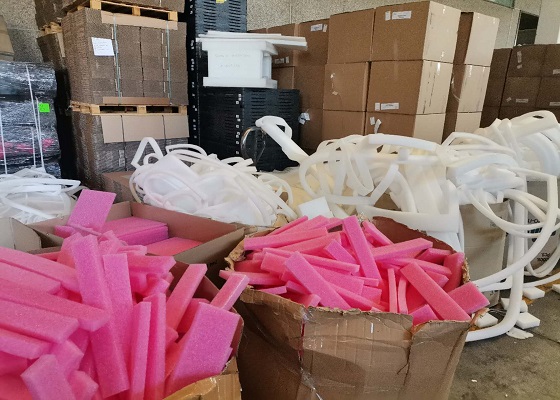
In an era where plastic waste management has become a global imperative, the recycling of Expanded Polyethylene (EPE) foam—widely used in packaging, insulation, and cushioning—demands innovative solutions. EPE recycling machines, such as those developed by GREENMAX, offer a sustainable pathway by leveraging mechanical processes to transform waste foam into reusable materials. This article explores two key mechanical recycling methods: cold pressing and hot melting, illustrated through real-world applications in Europe.
The Need for Mechanical Recycling
EPE foam, known for its lightweight and shock-absorbing properties, poses unique challenges due to its low density (0.01–0.03 g/cm³), which makes transportation and processing inefficient. Unlike chemical recycling, which involves breaking down polymers using solvents or heat, mechanical methods—cold pressing and hot melting—avoid hazardous byproducts and reduce energy consumption. GREENMAX, a leader in foam recycling technology, has engineered machines that address these challenges by compacting and reprocessing EPE waste into high-value resources.
Cold Pressing: Efficient Volume Reduction
Cold pressing technology, exemplified by GREENMAX’s Z-C100 series, operates on the principle of mechanical compression. The process begins with shredding EPE foam into small pieces, which are then fed into a hydraulic press. Under high pressure (up to 150 bar), the foam is compressed into dense blocks with a volume reduction ratio of 50:1, increasing density to 0.5–0.8 g/cm³. This not only minimizes transportation costs but also prepares the material for downstream processing.
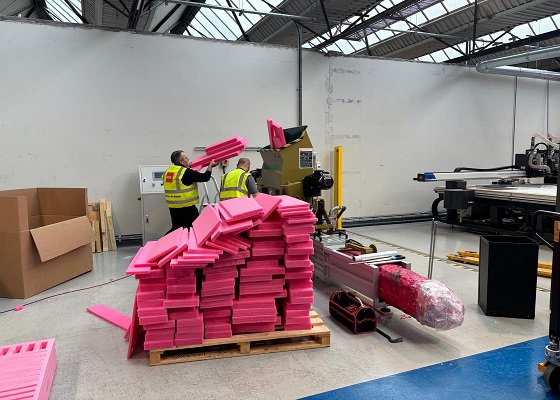
A notable application is a German electronics manufacturer’s recycling facility, where GREENMAX cold presses handle 800 tons of EPE packaging waste annually. By compressing foam scraps from product shipments, the facility reduced landfill reliance by 70% and sold compressed blocks to automotive suppliers, who repurpose them as interior padding. The energy efficiency of cold pressing—consuming only 50 kWh per ton—aligns with Germany’s strict environmental regulations, making it a cost-effective choice for mid-sized enterprises.
Hot Melting: From Waste to Reusable Pellets
For higher-value recycling, GREENMAX’s hot melting machines, such as the Foam Pelletizer series, convert EPE foam into uniform plastic pellets. The process involves shredding, washing, and melting the foam at 160–180°C, followed by extrusion and cutting into pellets. These pellets exhibit consistent melt flow rates (8–12 g/10 min) and are compatible with injection molding, enabling their use in new packaging, toys, and construction materials.
In the Netherlands, a recycling plant equipped with GREENMAX hot melting technology processes 1,200 tons of EPE waste yearly. The facility’s closed-loop system ensures 99.5% purity in pellets, which are supplied to Dutch furniture brands for eco-friendly cushioning. This project not only diverted 85% of local EPE waste from landfills but also created 15 new jobs in waste management and pellet production. The success of this initiative led to its replication in Belgium and Luxembourg, supported by EU funding for circular economy projects.
.png)
Advantages of GREENMAX Technology in Europe
GREENMAX machines stand out for their adaptability to European standards. Both cold pressing and hot melting systems comply with CE safety requirements and REACH regulations, ensuring recycled materials meet strict chemical safety thresholds. Additionally, the modular design of GREENMAX equipment allows customization: small-scale cold presses suit regional waste hubs, while industrial hot melting lines serve national recycling networks.
Conclusion
Mechanical recycling via EPE recycling machines offers a pragmatic solution to EPE foam waste, with cold pressing and hot melting as complementary methods. GREENMAX’s technology, demonstrated in German and Dutch case studies, showcases how mechanical processes can achieve high efficiency, cost-effectiveness, and environmental compliance. As Europe advances toward its 2025 plastic recycling targets, such innovations will play a pivotal role in transitioning from a linear to a circular economy, turning EPE waste into a valuable resource for generations to come.