
 Select Language
 English
A New Path for Green Transformation: EPS Foam Compactor Empowering Warehouse Waste Recycling
In the modern logistics and warehousing industry, EPS, commonly known as 'foam plastic,' is widely used as a cushioning packaging material. However, its low density and high volume characteristics make waste disposal in warehouses a significant challenge. Traditional landfilling not only consumes a large amount of land resources but also causes long-term environmental burdens due to EPS's non-degradable nature; meanwhile, incineration can release harmful gases, contradicting the principles of sustainable development. Against this backdrop, EPS foam compactors, with their core advantages of efficient volume reduction and resource recycling, have become a key technological solution for warehouse waste collection and reuse.
Pain Points of Warehouse EPS Waste and Traditional Treatment Dilemmas
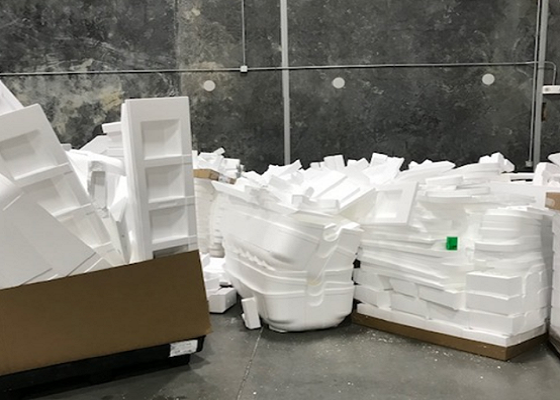
Warehouse EPS waste mainly comes from cushioning packaging used during product transportation, such as protective materials for electronics, home appliances, and fresh food. This type of waste is characterized by being "bulky but lightweight" 1 cubic meter of EPS foam weighs only about 10-20 kilograms but occupies storage space far beyond its actual value. In traditional treatment methods, landfill requires frequent transportation of large volumes of low-density waste, resulting in high logistics costs; incineration faces environmental compliance pressures, and some regions have explicitly restricted the incineration of foam plastics. Moreover, improperly treated EPS foam can enter the natural environment, causing "white pollution," which threatens soil, water sources, and biodiversity.
.png)
Practical data from a certain e-commerce logistics warehouse shows that after introducing an EPS foam compactor, the cost of handling EPS waste dropped by 60%—under the traditional landfill method, the warehouse had to pay high transportation and landfill fees every month, whereas with the EPS compactor, only the transportation fees for the compacted blocks and equipment electricity costs are required each month. At the same time, the compacted blocks serve as recycled raw materials, partially offsetting the processing costs.
A household appliance manufacturing company's finished goods warehouse uses a compactor to handle EPS waste, reducing annual landfill volume by approximately 500 cubic meters. In addition, the company supplies the compacted blocks to local recycled material manufacturers, not only generating extra revenue but also enhancing its brand image through the practice of a "green supply chain."
.jpg)